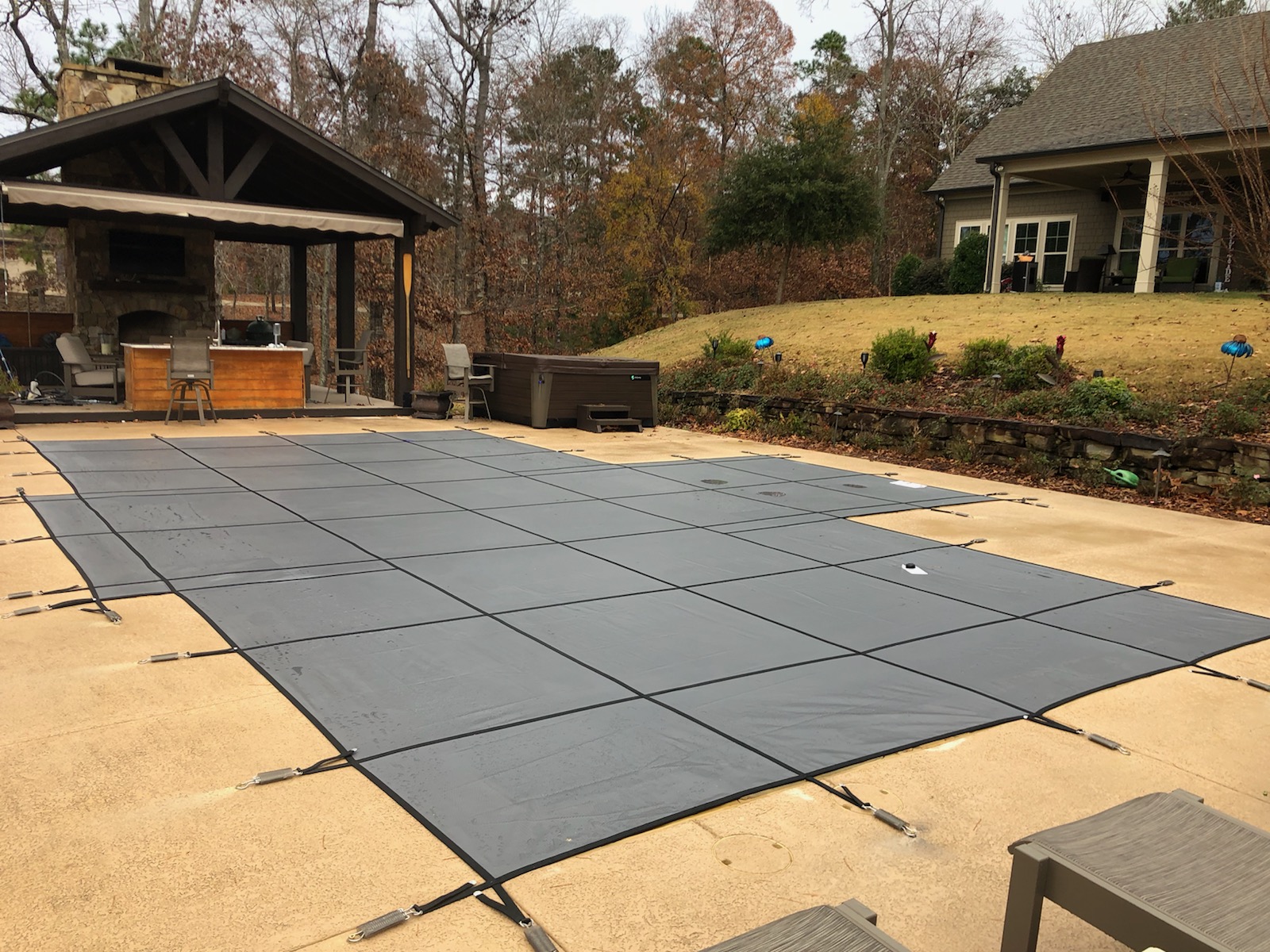
Every fall, the same question comes up from pool owners around Auburn and Opelika: is it time to close the pool yet? Close too early and you give algae weeks of warm weather to grow under the cover. Wait too long and a cold snap can catch water sitting in your pipes and equipment. Here’s how to time your pool closing for East Alabama’s climate, how to tell when it’s time, and what a proper closing actually involves.
The Short Answer: October to Early November
Most Auburn and Opelika homeowners close their pools in October or early November. That window lines up with two things that matter: the water has usually cooled off enough that algae growth slows way down, and it’s still well ahead of the first hard freeze, which in the Auburn area typically doesn’t arrive until late November or December.
That said, the calendar is only a starting point. Some years October stays warm and sunny well into the month; other years a cold front rolls through early. The better guide is what your water and the forecast are doing.
The 65-Degree Rule of Thumb
A widely used guideline in the pool industry is to close once the temperature stays consistently below about 65°F. Below that point, the water is too cool for most people to enjoy swimming, and algae has a much harder time getting established. That makes it the sweet spot: you’re not giving up good swim days, and the winterizing chemicals don’t have to fight warm-water algae all winter.
Tip: A simple floating pool thermometer is the easiest way to track this. When your water reads in the low 60s for several days in a row and the 10-day forecast is trending cooler, it’s a good time to get your closing on the calendar.
Signs It’s Time to Close Your Pool
- Nobody’s swimming anymore. If the pool hasn’t been used in a couple of weeks, you’re paying to run and treat it for no reason.
- Leaves are winning. Fall leaf drop in Lee County can overwhelm skimmer baskets and filters fast. A cover keeps that debris out instead of letting it sink, stain, and break down in the water.
- Water temperatures are steadily in the low 60s or below. That’s the 65-degree rule in action.
- The forecast shows the first cold nights coming. You want the pool closed before freezing temperatures are on the table, not after.
Why Closing Too Early Can Backfire
It’s tempting to shut the pool down right after Labor Day and be done with it. The problem is that Alabama Septembers and early Octobers are often still warm. Covered water that’s still in the 70s or 80s is an ideal environment for algae, and winterizing chemicals can only do so much against it. Close too early and there’s a good chance you’ll pull the cover off in spring to find a green pool — which makes your spring pool opening a much bigger job.
Why Waiting Too Long Is Risky
Auburn winters are mild compared to much of the country, but we still get hard freezes — and one is all it takes. Water left sitting in pipes, the pump, the filter, or a heater expands as it freezes and can crack plumbing or equipment housings. Those repairs often don’t show up until you try to start everything back up in spring. Properly blowing out the lines and draining the equipment before freezing weather arrives takes that risk off the table.
What a Proper Pool Closing Includes
A pool closing isn’t just throwing a cover on. Done right, it protects the water, the plumbing, and the equipment all winter. Our pool closing & winterization service covers four core steps:
1. Chemical Winterization Treatment
Untreated water left sitting for months will almost always turn green by spring. We treat the water with a winterizing chemical package designed to prevent algae growth and mineral scale buildup while the pool sits dormant. Starting with clean, balanced water is what makes this work, and cooler water makes the job much easier — another reason not to close while the water is still warm.
2. Plumbing Blowout & Antifreeze
Every line is blown clear of water and protected with antifreeze, so there’s nothing left in the plumbing to freeze and crack during a January cold snap.
3. Equipment Drain-Down
Pumps, filters, and other equipment are drained completely. A pump or filter housing that cracks over the winter is one of the most common — and most avoidable — spring repair bills.
4. Winter Cover or Safety Cover Installation
Finally, the pool is covered to keep leaves, pine straw, and pollen out of the water. We install your winter cover or a custom-fit mesh or solid safety cover, anchored and strapped down so it stays taut and in place. Many customers have a new safety cover installed at the same time as their closing so the pool is fully protected the moment it’s shut down.
Can You Close a Pool Yourself?
Some homeowners do. If you go the DIY route, the steps that matter most are the ones above: balance and treat the water, get every drop out of the plumbing and equipment, and secure a good cover. The plumbing blowout and equipment drain-down are where DIY closings most often go wrong, and they’re also where mistakes cost the most. If you’re closing on your own, our store at 520 Opelika Road in Auburn carries pool supplies and parts, and we’re happy to answer questions. If you’d rather not risk it, we’ll handle the whole job.
Closing Your Pool Makes Spring Easier
The payoff for a good closing comes months later. A pool that was closed with balanced, treated water, dry plumbing, and a secure cover opens faster, needs fewer chemicals to bring back, and is far less likely to surprise you with a cracked pump or a swamp under the cover. When warm weather returns, our pool opening service picks up right where the closing left off, and our weekly maintenance keeps it clean through the season.
Pool Closing FAQs
When should I close my pool in Auburn or Opelika, AL?
Most Auburn and Opelika homeowners close their pools in October or early November, once water temperatures settle below about 65°F and before the first hard freeze is likely.
Do I really need to winterize a pool in Alabama?
Yes. Auburn winters are mild compared to much of the country, but the area still gets hard freezes, and one hard freeze is enough to crack a pipe or damage a pump that still has water in it. Blowing out the plumbing and draining the equipment prevents that.
Can I close my pool too early?
Yes. If you close while the water is still warm, algae has weeks of warm weather to grow under the cover, and you lose good fall swim days. Waiting until the water has cooled gives the winterizing chemicals a much easier job.
What’s included in a pool closing?
Our pool closing includes a chemical winterization treatment, plumbing blowout and antifreeze, equipment drain-down, and installation of your winter cover or safety cover. See the full service details.
Should I get a mesh or solid safety cover?
Both keep debris out and cover the water while the pool isn’t in use. We install custom-fit mesh and solid safety covers and can help you choose the one that fits how your pool is used and how much sun and debris it gets. A safety cover can be installed at the same time as your pool closing.
Related Services
- Pool Closing & Winterization — protect your pool over the off-season
- Safety Covers — custom-fit mesh and solid covers
- Pool Opening — get your pool swim-ready in spring
- Opelika Pool Service — pool service for Opelika homeowners
Want more pool care basics? Read our guide on how to clean a pool.
Ready to Close Your Pool for the Season?
Clear H2O has been serving Auburn & Opelika pool owners since 2004. Call us and we’ll help you time your closing right and get it done properly so spring opening is quick and easy.