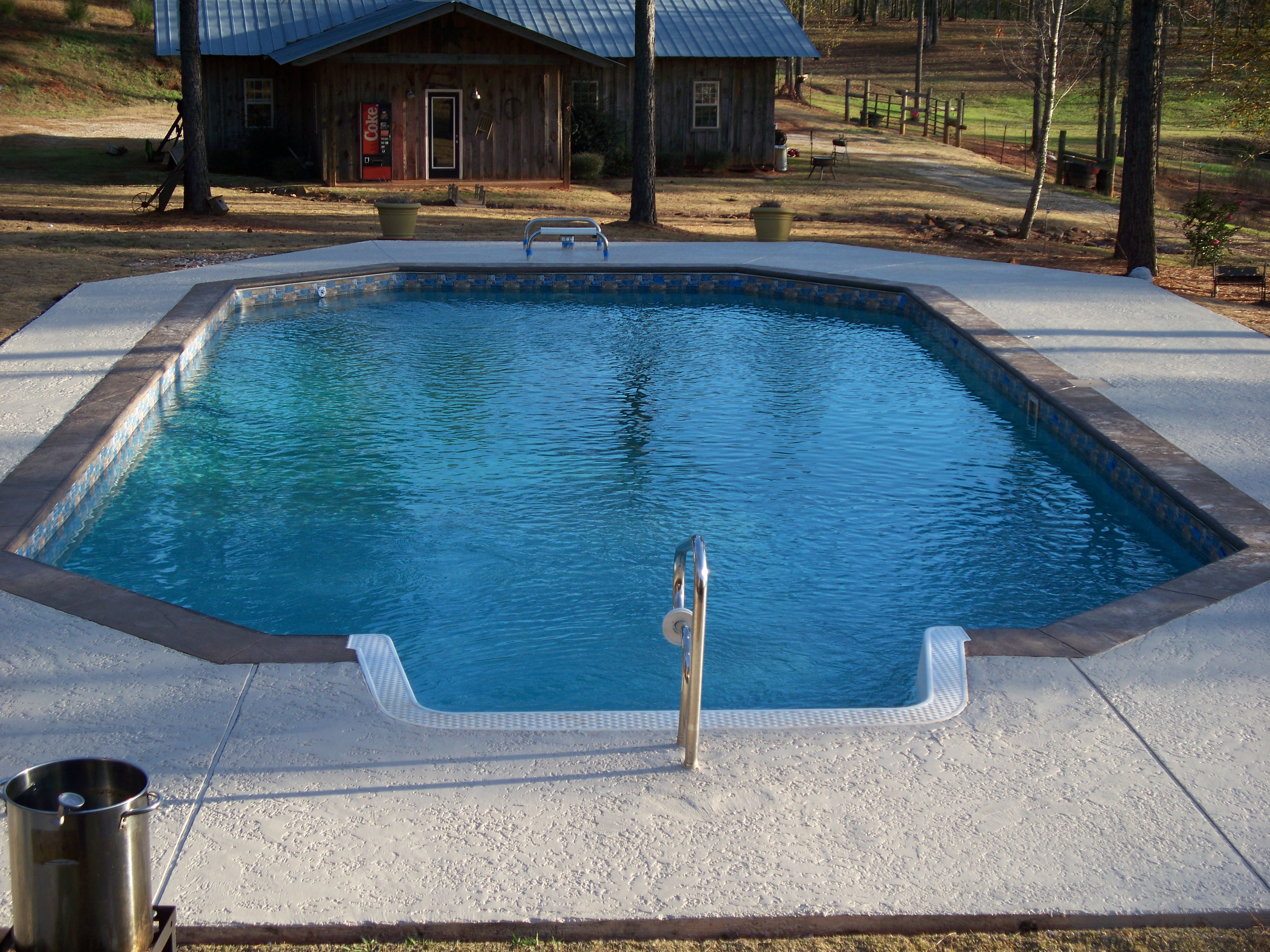
Keeping a pool clean comes down to one repeatable routine, done in this order: skim, brush, vacuum, empty the baskets, clean the filter, then test and balance your chemicals. Here’s how to do each step correctly.
1. Skim the Surface First
Before you do anything else, skim leaves, bugs, and debris off the surface with a net. Debris left floating will eventually sink and break down, making the rest of your cleaning job harder and staining your liner or plaster if it sits too long. Skimming takes two minutes and should be the very first thing you do every time you clean.
2. Brush the Walls and Floor
Algae and biofilm cling to pool walls, steps, and corners — especially in areas with low water circulation. Use a pool brush to scrub the walls, floor, steps, and any tile line at least once a week. Work from the shallow end toward the deep end so loosened debris settles where your vacuum or main drain can pick it up.
Tip: Use a nylon-bristle brush on vinyl liners and fiberglass to avoid scratching the surface. Stiffer stainless-steel brushes are only appropriate for plaster or concrete pools.
3. Vacuum the Pool
After brushing, vacuum the floor to remove the debris you just loosened, along with anything that’s settled since your last cleaning. You can use a manual vacuum connected to your filtration system, or a robotic/automatic pool cleaner if you have one. Move slowly and overlap your passes — rushing through a vacuum job just stirs up sediment without actually removing it.
4. Empty the Skimmer & Pump Baskets
Your skimmer basket and pump basket trap leaves, bugs, and debris before they reach your filter. A clogged basket restricts water flow, makes your pump work harder, and reduces circulation — which directly affects water clarity. Check and empty these baskets at least once a week, more often during peak leaf and pollen season.
5. Clean or Backwash the Filter
Your filter is what actually pulls fine particles out of the water, so it needs regular attention:
- Sand filters — backwash when the pressure gauge reads 8–10 PSI above the clean, start-up reading.
- Cartridge filters — remove the cartridge and hose it off every 2–4 weeks, and do a deeper chemical soak a couple times a season.
- DE (diatomaceous earth) filters — backwash like a sand filter, then recharge with fresh DE powder afterward.
A dirty filter is one of the most common (and most overlooked) causes of cloudy water.
6. Test and Balance Your Water Chemistry
Cleaning debris out is only half the job — keeping your water chemically balanced is what actually prevents algae, cloudiness, and equipment damage. Test your water at least twice a week with test strips or a liquid test kit, and aim for these ranges:
- Free chlorine: 1–3 ppm
- pH: 7.4–7.6
- Total alkalinity: 80–120 ppm
- Cyanuric acid (stabilizer): 30–50 ppm
If your pH or alkalinity drifts too far in either direction, chlorine becomes far less effective at killing bacteria and algae — even if your chlorine level looks fine on paper. Balance the water first, then adjust sanitizer as needed.
7. Shock the Pool When Needed
Shocking — adding a large dose of chlorine or a non-chlorine oxidizer — burns off contaminants like sweat, sunscreen, and combined chlorine (chloramines) that regular chlorination doesn’t fully remove. Shock your pool weekly during heavy swim season, after a big pool party, after heavy rain, or any time the water starts to smell strongly of chlorine (a sign of chloramines, not too much chlorine).
8. Keep the Water Level Consistent
Check your water level regularly, especially during hot Alabama summers when evaporation picks up. Water should sit at the middle of your skimmer opening. If it drops too low, your pump can suck air and run dry, which damages the motor. Top it off with a hose as needed.
9. Run Your Pump Long Enough
Circulation is what keeps chemicals distributed and debris moving toward your filter. As a general rule, run your pump long enough to turn over your entire pool volume once per day — typically 8–12 hours during summer, split into a few shorter cycles if you have a variable-speed pump. Cutting circulation time short is one of the fastest ways to end up with green or cloudy water.
A Simple Weekly Routine
If you only remember one thing from this guide, remember this order: skim, brush, vacuum, empty baskets, clean the filter, then test and balance your chemicals. Doing these steps in this sequence — and doing them consistently every week — is the single best way to avoid the algae blooms, cloudy water, and equipment problems that turn pool ownership into a headache. Or skip the routine entirely with our weekly maintenance service.
Related Services
- Weekly Pool Maintenance — recurring cleaning and chemical balancing
- Pool Opening — get your pool swim-ready for the season
- Pool Closing & Winterization — protect your pool over the off-season
- Vinyl Liner Replacement — fix a worn or damaged liner
Would Rather Not Do It Yourself?
Clear H2O has been handling weekly pool maintenance for Auburn & Opelika homeowners since 2004. We’ll keep your water balanced and your equipment running — no guesswork required.