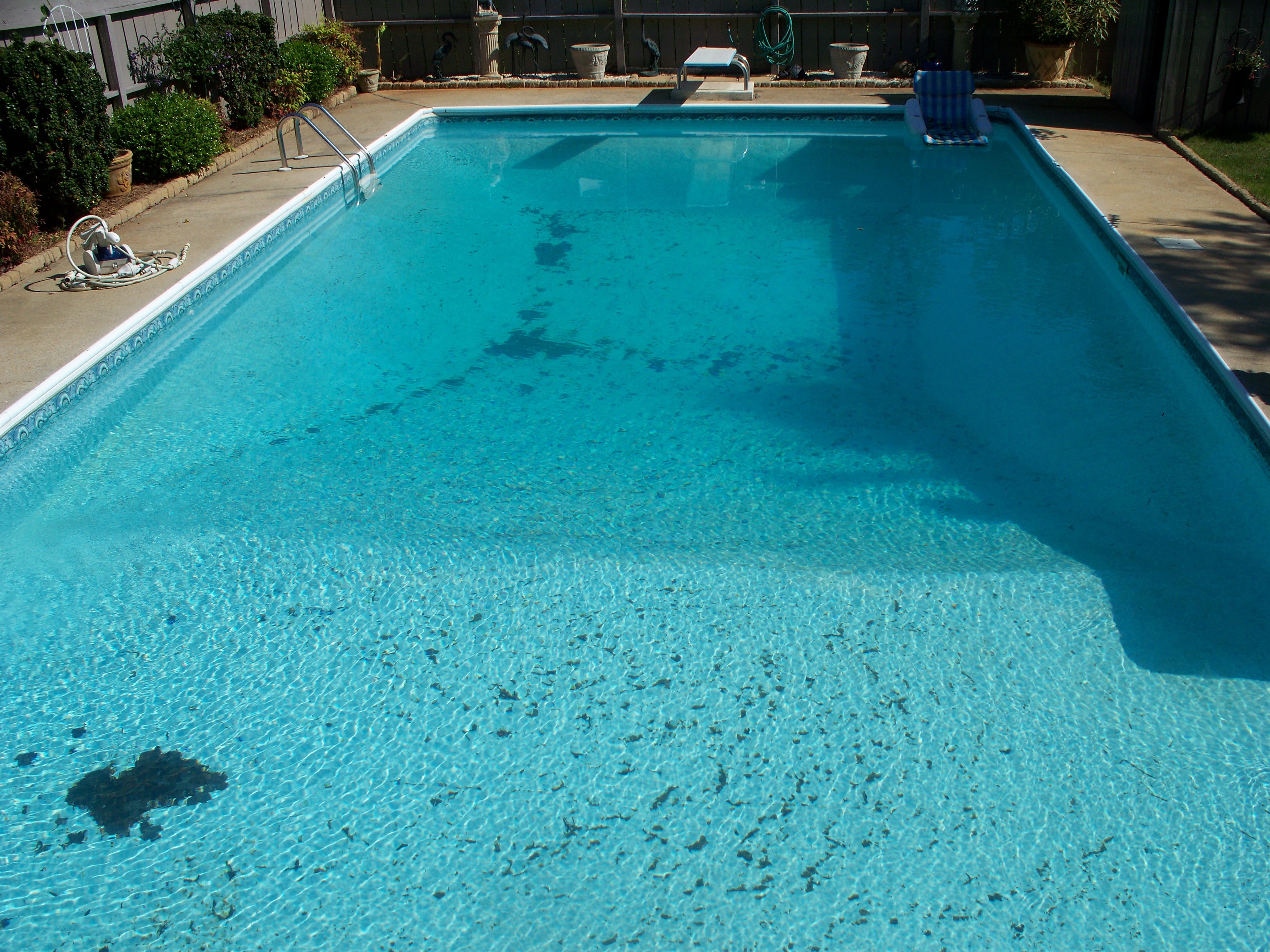
A vinyl liner does two jobs at once: it’s the finish you see every time you look at your pool, and it’s the waterproof barrier that keeps water inside the pool and off the walls and floor behind it. When a liner starts to fail, it rarely happens all at once. It fades a little each summer, gets a wrinkle here, a stain there, and then one day the water level seems to drop faster than it should. This guide covers how long vinyl liners usually last, the warning signs that a replacement is coming, what shortens a liner’s life, and why the off-season is a smart time for Auburn and Opelika pool owners to start planning.
How Long Does a Vinyl Pool Liner Last?
Most in-ground vinyl liners last somewhere in the range of 8 to 15 years. Where your liner lands in that range depends mostly on two things: how consistently the water chemistry is kept in balance, and how much sun the pool gets. A well-maintained liner on a partly shaded pool can reach the upper end. A liner in full sun with chemistry that swings up and down all season will often wear out much sooner.
East Alabama summers are long, hot, and bright, and pools here are often open for a big chunk of the year. That means more UV exposure and more months of chemical treatment than pools in colder climates see — both of which add up on vinyl over time. If your liner is approaching the ten-year mark, it’s worth looking it over closely even if nothing seems obviously wrong.
7 Signs You Need a New Pool Liner
1. Fading and Discoloration
Some fading is normal — the pattern near the waterline usually goes first because it gets the most sun. But heavy, uneven fading, chalky patches, or a pattern that has bleached nearly white are signs the vinyl is breaking down. Faded vinyl has usually lost some of its flexibility, too, which makes it more likely to crack or tear.
2. Stains That Won’t Come Out
Leaves, metals in the water, and algae can all stain a liner. Many surface stains can be treated, but stains that come back no matter what you try, or that cover large areas of the floor and walls, often mean the surface of the vinyl itself is worn. At that point, chasing stains with more chemicals can do more harm than good.
3. Wrinkles That Won’t Smooth Out
A new liner should fit tight and smooth. Wrinkles develop when the vinyl stretches or shrinks with age and chemistry changes, or when the water level drops too low and the liner shifts. Small wrinkles are mostly a cosmetic issue, but large folds trap dirt, are hard to brush clean, and wear faster than the rest of the liner because they stick up into the path of cleaners and feet.
4. Brittle or Rough Texture
Run your hand along the liner just below the waterline. Healthy vinyl feels smooth and a little soft. Old vinyl can feel stiff, rough, or almost papery. Brittle vinyl is much more likely to crack, especially around steps, corners, and fittings where it’s under the most stress.
5. Cracks, Tears, or Pinholes
A single small puncture can often be patched, even underwater. But once you’re finding new tears or cracks every season, the liner is telling you it’s near the end. Patching an aging liner tends to become a cycle: fix one spot and another opens up nearby.
6. The Liner Is Pulling Away From the Track
Along the top edge of the pool, the liner’s bead snaps into a track under the coping. As vinyl ages and shrinks, the bead can pull out of the track — usually in one spot first, often on the sunniest side of the pool. Sometimes it can be reseated, but a liner that keeps slipping out is under too much tension to stay put for long.
7. You’re Losing Water
Every pool loses some water to evaporation, especially in an Alabama summer. But if the water level keeps dropping faster than you’d expect for the weather, a leak in the liner may be the cause. A simple way to check is the bucket test: set a bucket of pool water on a pool step, mark the water level inside the bucket and on the pool wall, and compare after 24 hours with the pump running normally. If the pool drops noticeably more than the bucket, you’re likely losing water somewhere besides evaporation — and with an older liner, the liner itself is a common culprit.
Good to know: If your water chemistry has been hard to keep in balance lately — chlorine disappearing fast, pH drifting, algae that keeps coming back — a failing liner can be part of the reason. Constant top-offs from a slow leak bring in fresh, untreated water that throws the balance off over and over.
What Shortens a Liner’s Life?
You can’t stop a liner from aging, but you can avoid the things that wear it out early:
- Unbalanced water. Low pH and alkalinity make water aggressive toward vinyl, while high pH contributes to scaling and staining. Keeping the water balanced week to week is the single biggest factor in liner life. Our guide on how to clean a pool covers the basics of testing and balancing.
- Concentrated chemicals. Pouring granular chlorine or shock straight into the pool lets undissolved product settle on the floor and bleach the vinyl. Pre-dissolve or broadcast it per the label with the pump running, and add one chemical at a time.
- Letting the water level drop too low. The weight of the water helps hold the liner in place. When the level falls too far, the liner can shift, stretch, and wrinkle.
- Sharp objects. Pet claws, hard-edged toys, and worn-out brushes or vacuum heads with exposed metal can scratch or puncture vinyl. Use brushes made for vinyl pools.
- Sun exposure. UV breaks vinyl down over time. You can’t move your pool into the shade, but keeping the pool covered when it’s closed for the season helps.
- Skipping a proper closing. A pool left to sit without balanced, treated water can grow algae and stains that are hard on the liner. A full pool closing & winterization protects the liner along with the rest of the pool, and a safety cover keeps debris and sunlight off it until spring.
Why Plan a Liner Replacement in the Off-Season?
Most people start thinking about a new liner in the spring, right when they’re ready to swim. The fall and winter months are a better time to start the conversation:
- You’re not giving up swim days. A replacement means draining the pool. Doing it while the pool isn’t in use means you don’t lose any of the summer.
- You have time to choose a pattern. Liner patterns range from classic solid blues to stone and pebble-look prints. Planning ahead gives you time to look at samples in person instead of making a rushed decision.
- You avoid the spring rush. Spring is the busiest time of year for pool work. Getting your questions answered and a quote in hand early means you’re not waiting in line when the weather warms up.
- You don’t pour another season of chemicals into a leak. If your liner is already losing water, every month of top-offs and extra chemicals is money spent keeping a failing liner going.
Why Liner Replacement Is a Job for a Pro
Replacing a liner looks simple from the outside — take the old one out, put the new one in — but an in-ground pool shouldn’t be drained without care. Once the water is out, nothing is holding the walls and floor against the soil and groundwater around them, and the pool needs to be refilled promptly once the new liner is set. A replacement liner also has to be measured precisely so it fits tight without over-stretching.
Here’s how Clear H2O handles a vinyl liner replacement:
- Full drain and liner removal. We drain the pool and remove the old liner completely.
- Floor and wall inspection. With the liner out, we inspect the walls, floor, and any wall foam or coving underneath for damage an old liner would otherwise hide, and repair any issues before the new liner goes in.
- Custom-fit installation. We install your new liner and smooth out wrinkles and folds as we go for a tight, wrinkle-free fit.
- Refill and rebalance. We begin refilling and rebalancing the water so your new liner starts its life in properly treated water.
Want to see the difference a new liner makes? Our before & after liner replacements show real pools we’ve redone in Auburn and Opelika — including stained, worn-out liners like the one pictured above.
Pool Liner FAQs
How long does a vinyl pool liner last?
Most in-ground vinyl liners last about 8 to 15 years. Consistent water chemistry and less direct sun push a liner toward the longer end of that range; unbalanced water and heavy sun exposure wear it out sooner.
Can I patch my liner instead of replacing it?
A single small tear or puncture can often be patched, even underwater. If the liner is also faded, brittle, wrinkled, or pulling out of its track — or you keep finding new tears — replacement is usually the better long-term choice.
How do I know if my pool liner is leaking?
Try the bucket test: place a bucket of pool water on a pool step, mark the water level in the bucket and on the pool wall, and compare after 24 hours. If the pool loses noticeably more water than the bucket, you likely have a leak beyond normal evaporation.
Should I drain my pool to replace the liner myself?
We don’t recommend it. Draining an in-ground vinyl pool leaves the walls and floor without the water pressure that normally supports them, and the new liner has to fit precisely. A professional replacement includes inspecting and repairing the walls and floor before the new liner goes in.
Can I choose a different liner pattern?
Yes. Clear H2O carries a wide selection of liner patterns and colors, from classic solid blues to stone and pebble-look prints. You can see samples in person at our store at 520 Opelika Road in Auburn.
Related Services
- Vinyl Liner Replacement — full drain, inspection, and custom-fit installation
- Liner Replacement Before & Afters — real results from Auburn & Opelika pools
- Pool Closing & Winterization — protect your liner over the off-season
- Weekly Maintenance — balanced water all season long
Is It Time for a New Liner?
Clear H2O has been serving Auburn & Opelika pool owners since 2004. Call us for a liner replacement quote, or stop by the store to see pattern samples in person.